

A New Framework Establishes 'The Hallmarks of Skeletal Muscle Health'
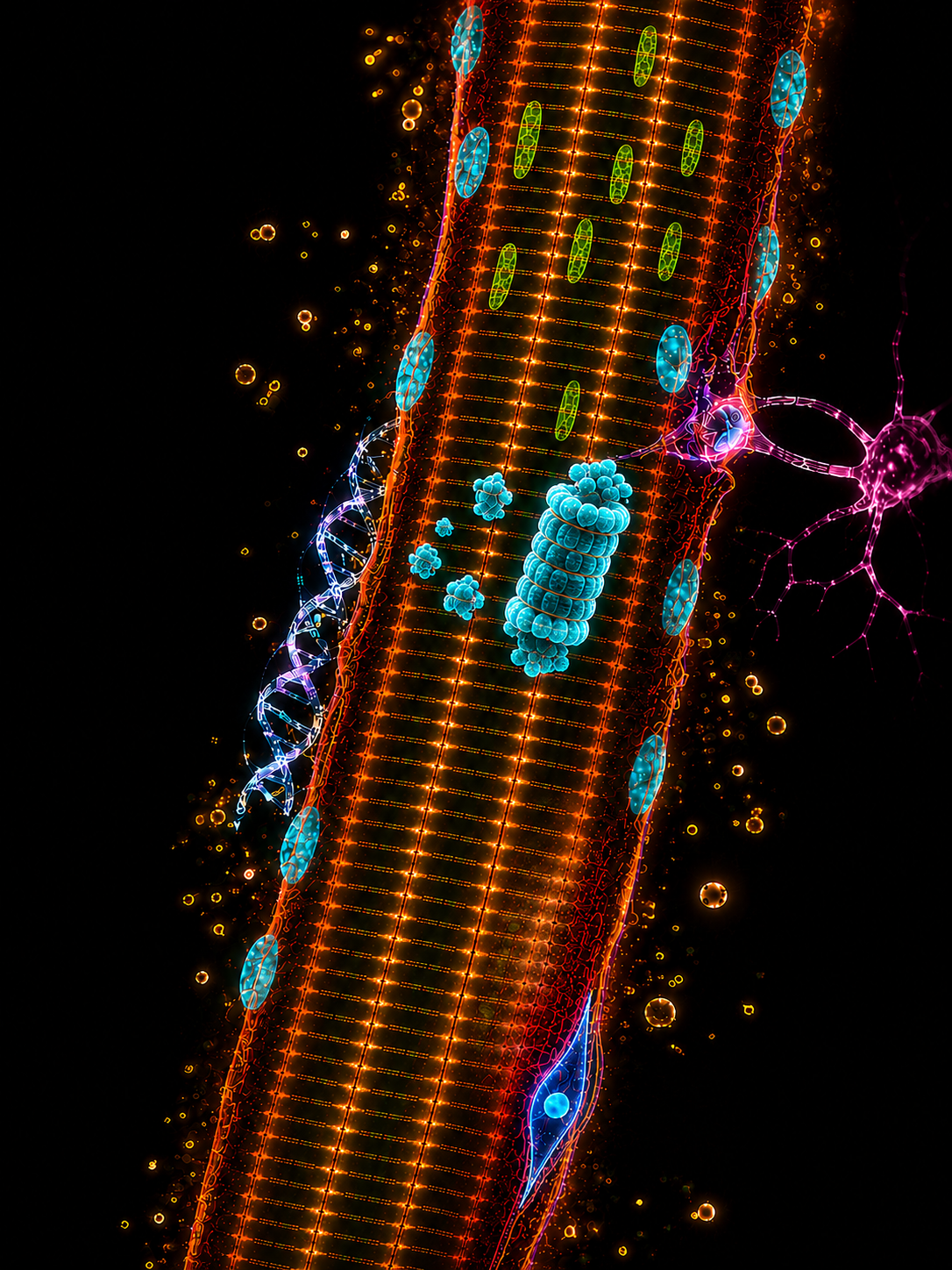
An international consortium of experts outlines a unifying conceptual framework to transform precision diagnostics, therapeutics, and healthy aging strategies
TORONTO, CANADA, August 20, 2026 /EINPresswire.com/ -- Today, an international team of leading muscle and metabolic biology researchers published a new framework in Nature Metabolism, titled "The Hallmarks of Skeletal Muscle Health." The publication introduces a comprehensive framework defining seven interdependent properties that govern muscle integrity, resilience, and function across the lifespan.Skeletal muscle accounts for 40% to 50% of total body mass in non-obese individuals and serves as a vital regulator of systemic metabolism, amino acid storage, and inter-organ endocrine communication. Despite its critical role in healthspan and in conditions ranging from aging and cancer cachexia to cardiovascular disease, and metabolic disorders, the field has historically lacked an overarching model equivalent to the established hallmarks of cancer or aging.
The newly proposed framework addresses this gap, offering a grounded foundation to support biomarker discovery, clinical trial design, and precision medicine interventions.
"Skeletal muscle is far more than an engine for movement. It is a dynamic metabolic and endocrine hub central to overall health," said Dr. Anna Vainshtein, first author from Craft Science Inc. "By defining these seven interconnected hallmarks, we aim to provide the scientific and clinical communities with a shared language and roadmap to move beyond piecemeal approaches toward more comprehensive, clinically meaningful strategies."
The Seven Hallmarks of Skeletal Muscle Health
The authors organize skeletal muscle homeostasis into seven interconnected, measurable, and potentially modifiable hallmarks:
- Metabolism & Bioenergetics: The capacity to dynamically switch substrate utilization between carbohydrates and fats while maintaining mitochondrial quality and microvascular perfusion.
- Proteostasis: The dynamic equilibrium between protein synthesis, folding fidelity, and catabolic clearance pathways (autophagy-lysosome and ubiquitin-proteasome systems).
- Genomics: Transcriptional programs, long-range chromatin interactions, and epigenetic memory that define muscle cell identity and adaptive potential.
- Excitability: The faithful conversion of motor neuron action potentials into calcium release and contraction across the neuromuscular junction and triads.
- Structure: The architectural integrity of the sarcomeric scaffold, costameres, and extracellular matrix required to transmit force and withstand mechanical stress.
- Regeneration: The competence of satellite cells and their supportive niche to repair tissue following injury or wear-and-tear.
- Crosstalk: Bi-directional endocrine and paracrine signaling via myokines, metabokines, and extracellular vesicles communicating with the brain, liver, bone, adipose tissue, and gut.
Timeliness in Modern Therapeutics
This framework arrives at a pivotal moment in global healthcare. The widespread adoption of GLP-1 receptor agonists for weight management has intensified the focus on weight-loss-associated changes in lean muscle mass and the risks of muscle loss during weight cycling. Simultaneously, clinical trials involving myostatin/activin pathway blockade, gene therapies, and anabolic interventions face ongoing challenges due to a lack of precise endpoints that distinguish simple muscle mass from muscle quality and function.
"Current clinical assessments often identify muscle decline too late, relying on late-stage indicators like loss of mass or physical function," said corresponding author Dr. Marco Sandri of the University of Padova. "Because these seven hallmarks interact non-linearly, failure in one domain can destabilize the entire system. This framework argues that next-generation therapies may need to be multimodal, pairing molecular or pharmacological strategies with targeted exercise and nutrition to restore systemic balance."
By shifting the focus toward proactive, mechanism-aligned biomarkers, the authors hope that "The Hallmarks of Skeletal Muscle Health" will help guide the development of early diagnostic panels and targeted therapeutic strategies designed to preserve physical independence and systemic metabolic health.
About the Study
The paper, "The Hallmarks of Skeletal Muscle Health," was authored by Anna Vainshtein, Bert Blaauw, Katrien De Bock, Pura Muñoz-Cánoves, Eric N. Olson, Coen A. C. Ottenheijm, Erik A. Richter, Jorge L. Ruas, Laurent Schaffer, Bruce Spiegelman, and Marco Sandri. Representing an international collaboration across premier academic and research institutes in Canada, Italy, Switzerland, Spain, Denmark, France, and the United States, the full study is available online in Nature Metabolism.
About Craft Science
Craft Science is a scientist-led medical and scientific communications company that works across academia, biotechnology, pharmaceutical research and the broader life-sciences sector to translate complex evidence into clear, rigorous and clinically meaningful scientific communications. Craft Science is based in Toronto, Canada.
Leesa Dalto
Liberty Bell Public Relations
+1 516-524-7913
email us here
Legal Disclaimer:
EIN Presswire provides this news content "as is" without warranty of any kind. We do not accept any responsibility or liability for the accuracy, content, images, videos, licenses, completeness, legality, or reliability of the information contained in this article. If you have any complaints or copyright issues related to this article, kindly contact the author above.
